Downloadable Files:
Text:
That You May Know The Certainty
Lesson 25: Jesus’s Resurrection (Luke 23:50-24:35)
After being condemned to death despite His innocence, Jesus was crucified between two thieves. He spent around six hours on the cross until He died. It was now likely Friday of the week that began with Jesus entering Jerusalem. Although Jesus’s sacrifice had been made, the story was not complete.
Jesus’s Body Is Buried (Luke 23:50-56)
23:50-56. Jesus’s death had been confirmed by the Roman soldiers piercing Jesus’s side (John 19:31-37). Joseph of Arimathea (about 20 miles northwest of Jerusalem) requested Jesus’s body from Pilate so he could bury it before the Sabbath began. Jesus’s body was taken off the cross, wrapped in fine linen, and placed into a new tomb (Matthew 27:57-61; Mark 15:42-47; John 19:38-42). Joseph was a good and righteous man, a prominent member of the Sanhedrin, rich, one who was looking forward to the kingdom of God (the Messianic kingdom), and a secret disciple of Jesus (due to fear of the Jews, Matthew 27:57; John 19:38; 9:22; 12:42). Despite being part of the Sanhedrin, which condemned Jesus to death (Mark 14:64), Joseph did not agree with putting Jesus to death (perhaps absenting himself from the decision or remaining silent). Thus, Jesus was with a rich man at His death (Isaiah 53:9). His burial likely took place on Friday, during the preparation day before the Sabbath in the hours between His death (around 3 p.m.) and the beginning of Sabbath (around 6 p.m.; Deuteronomy 21:22-23). The women who followed Jesus from Galilee went to see Jesus’s burial. Then, they returned to their residences and prepared spices and perfumes for Jesus’s body. They rested on the Sabbath according to God’s command. Note that a large stone was placed in front of the tomb (Matthew 27:60), which was then sealed, and the tomb was guarded so Jesus’s body would not be stolen (Matthew 27:61-66).
Jesus Has Risen (Luke 24:1-12)
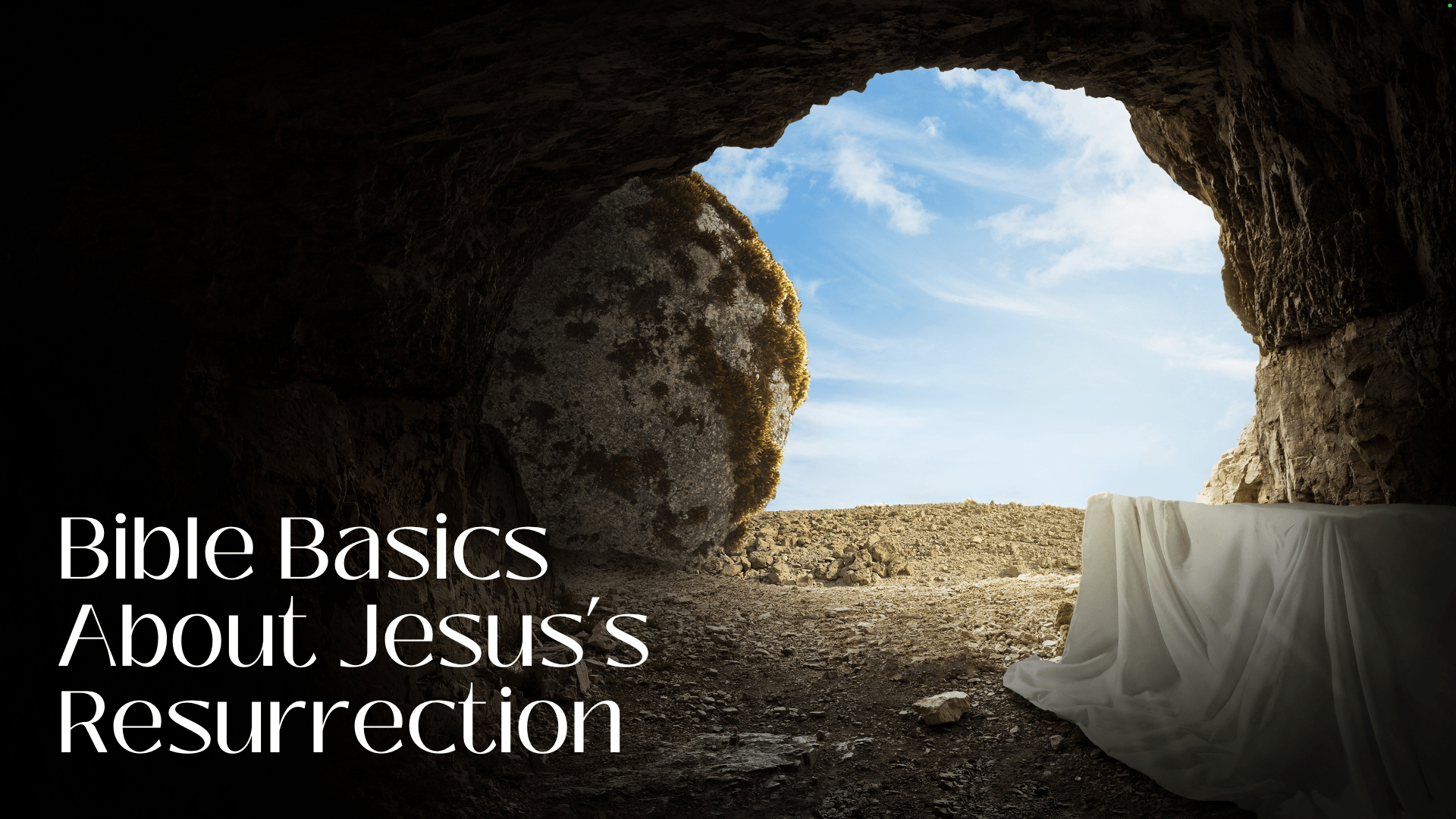
24:1-8. It was now the first day of the week (Sunday). The women who had prepared the spices and perfumes came to the tomb very early in the morning. When they arrived, they found the stone rolled away from the tomb (having been moved by an angel, Matthew 28:1-4). They entered the tomb and did not find Jesus’s body. They were perplexed and terrified and bowed when two men (two angels, Mark 16:5; John 20:11-13) stood by them in dazzling clothes. The men asked why the women were looking for the Living among the dead and urged them to remember how Jesus had spoken in Galilee to foretell His betrayal, crucifixion, and resurrection on the third day (Luke 9:21-22; Mark 8:31-33; 9:30-32; Matthew 28:5-7; Mark 16:6-7). It was now the third day (part of the day Friday, all day Saturday, and part of the day Sunday) and the women remembered His words.
24:9-12. The women were to go and tell the apostles Jesus had risen (Matthew 28:7-8). Although there is difficulty knowing the exact sequence of events concerning those who came and left from the tomb (harmonizing Matthew 28:1-10; Mark 16:1-13; Luke 24:1-12; John 20:1-18), it is clear that the resurrected Jesus appeared to the women (Matthew 28:9-10; first appearing to Mary Magdalene, Mark 16:9-13). News was reported to the apostles and other disciples. These words seemed like nonsense to them and they did not believe the women. However, Peter (also John, John 20:1-10) got up and ran to the tomb, looked into the tomb, and saw only the burial clothes (with the wrapping that had been over His head folded in a separate place). He went away amazed at what had happened!
Jesus Appears To Two Men (Luke 24:13-35)
24:13-16. Luke has given proof of Jesus’s resurrection thus far through the empty tomb and the testimony of the angel. Now, he records this story in detail about two of the disciples (Luke 24:9, 11) who were on their way to the village called Emmaus (about seven miles from Jerusalem). These were walking and trying to reason about everything that had happened. Just then, Jesus came near and began to walk alongside them, though they were prevented from recognizing Him (having appeared in a different form, Mark 16:12-13).
24:17-27. As Jesus asked them about their exchange of words, they stopped walking and looked discouraged. One of them (named Cleopas) asked if Jesus was the only visitor in Jerusalem who did not know what had happened. After Jesus asked for clarification, they said they were speaking about the things concerning Jesus of Nazareth. They confessed Him as a powerful prophet in both action and speech before God and all the people (Deuteronomy 18:15-19) who was handed over to receive a death sentence by the Jewish leaders and then be crucified. They confessed they had been hoping He was the Messiah (to redeem Israel). However, it was now the third day since He had been in the tomb (Luke 9:21-22; 18:31-34). There had been some amazing and confusing reports from the women (Luke 24:1-12), who claimed they did not find Jesus’s body in the tomb and reported visions of angels who said Jesus was alive. Some of their companions (e.g. Peter, John, possibly others) also went to the tomb and reported the same concerning the empty tomb. Jesus then answered them by saying they were foolish and slow of heart to believe all the prophets had spoken. Jesus indicated how it was necessary for the Messiah to suffer to enter His glory to be exalted as King (Psalm 2; Isaiah 53; 1 Peter 1:10-12, 18-21; 1 Timothy 3:16; Philippians 2:5-11; etc.). Jesus then began with Moses and all the prophets and explained all the Scriptures concerning Himself (the Messiah)!
24:28-35. When they came near the village, Jesus indicated He would continue, but they urged Him to stay with them (as the day was almost over). With this, Jesus went and stayed with them. As they reclined at the table with Jesus, Jesus took the bread, blessed and broke it, and gave it to them to eat. Their eyes were opened to recognize Him (whatever had prevented this previously was removed). But, He then disappeared from their sight. The two disciples then conversed that their hearts had burned within them while Jesus was talking with them on the road and explaining the Scriptures. It was as if they were spiritually enlightened on their journey to understand the Scriptures concerning the Messiah and how Jesus had fulfilled all those things! Despite the later hour, they returned to Jerusalem to find the Eleven (apostles) and those with them. Finding the Eleven (minus Thomas, John 20:24), it seems the Eleven (or at least some among them) were proclaiming Jesus’s resurrection (though there was also disbelief, Luke 24:37-42; Mark 16:12-14) and His appearance to Simon (likely Peter, 1 Corinthians 15:5). The two disciples Jesus had revealed Himself to in Emmaus then began to describe the events they had experienced!
Conclusion
Despite the terrible suffering and death Jesus experienced, God triumphed and glorified Jesus through His resurrection from the dead! This, though, was not a secret event that occurred. Rather, Luke has demonstrated the tomb was empty and Jesus physically appeared to others.